
Treatment of Odontogenic Infections
Tara Renton
This session will address the management of odontogenic infections. It will cover the diagnosis of spreading infection and the recommended treatments. Emergency management will also be discussed.

Skin Cancer
Suzanne Mahon, RN, DNSc, AOCN, AGN-BC
3.00 Hours
Skin cancer is a major public health problem. There are more than 5.4 million cases of basal cell skin cancer, squamous cell skin cancer, Merkel cell skin cancer, keratoacanthoma, dermatofibrosarcoma protuberans, and cutaneous lymphoma skin cancer annually, and the incidence rates of melanoma have been increasing for at least th....
Special Considerations in Trauma Nursing
Erik J. Usher, RN, BS, CEN, CPEN, EMT-P, CFRN
13.00 Hours
After an introduction to the etiology of trauma and components of a trauma care system, this course highlights special considerations beyond the initial assessment of the trauma patient. These considerations include areas of high-risk and special populations seen in trauma care. Shock states and burn/cold trauma require specia....

Understanding the Immune System Response to Biologic Therapies
Karen Roesser, RN, MSN, AOCNS®
1.00 Hours
The immune system is composed of organs, tissues, cells, and cell products that defend the body from pathogens and other foreign substances. Biologic therapy, also referred to as immunotherapy or biotherapy, uses the response of the immune system to treat cancer and autoimmune disease. This presentation will discuss the componen....

Using the Comprehensive Unit-Based Safety Program (CUSP) to Reduce Central Line-Associated Bloodstream Infections
Laura Kate Tyner, BSN, RN, CIC
1.00 Hours
Over 250,000 central line-associated bloodstream infections (CLABSIs) are reported by health care organizations each year. CUSP is a structured, strategic framework for safety improvement that integrates communication, teamwork, and leadership to create and support a culture of patient safety that can prevent CLABSI and other ha....

Supporting Pregnant Domestic Violence Survivors in Shelters
Fern Gilkerson, M.A. and Kenya Fairley, M.S.Ed., C.D. (DONA)
1.00 Hours
Pregnant women’s experiences and needs for emotional support, physical well-being, access to healthcare and other community-based services are significantly different from women who are not pregnant. This CEU course provides information on the impact of trauma in pregnancy and childbirth.

Weighing and Measuring Infants and Children
Gary Butler Consultant and Professor in Paediatric and Adolescent Endocrinology
0.50 Hours
This session is an introduction to the techniques of accurate growth measurement and monitoring required for delivery of the Healthy Child Programme.This session was reviewed by Elaine Tabony and updated in February 2017.

Sexual History Taking in the General Practice Context
Philippa Matthews
0.50 Hours
This is the second of the group of introductory sessions for the sexual health and contraception module.This session is the first of three which address how to take a patient's sexual history. This session has been written in conjunction with Sexual Health in Practice (SHIP). Please see acknowledgements for more details. This se....

Sexually Transmissible Infections Management
Philippa Matthews
0.50 Hours
This session gives learners an overview of the management of STIs in the GP context.

Sexually Transmissible Infections Update
Philippa Matthews
0.50 Hours
This session will update the learner on sexually transmitted infections: the most common and the most clinically significant.

The Patient with Double Vision
Alessandra Dale
0.50 Hours
This session will provide a core knowledge of the assessment, differential diagnosis and management of a patient presenting in primary care with diplopia (double vision) and demonstrate how to identify potentially serious cases which need urgent referral. This session was last reviewed by Paresh Dawda and updated on 01/07/2013.
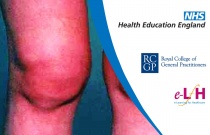
The Child with a Swollen Joint
Sharmila Jandial and Helen Foster
0.25 Hours
This session describes approaches to the assessment and management of children presenting with one or more swollen joints.

The Patient with Retinal Problems
Stella Hornby - Module Editor: Eye Problems
0.50 Hours
This session will provide users with core knowledge about the clinical features of retinal problems and the management of diabetic retinopathy and age-related macular degeneration. This session was last reviewed by Paresh Dawda and updated on 01/07/2013.

Supporting Strategies for Speech, Language and Communication
Maggie Cooper - Head of the Department of Applied Language Sciences
0.50 Hours
This session will provide an overview of the generic advice that would typically be offered by a speech and language therapist in the UK when advising parents of children with speech and language delay. Much of this advice is transferable across a range of conditions and has been shown to positively influence spoken language acq....

Sedation (Anaesthesia)
Sara Rees
This session outlines the practical issues involved with sedating patients including the methods, equipment required and safety issues.

Ventilation During Maintenance: Spontaneous or Mechanical
Dr Gavin Werrett
The session outlines when to select a spontaneous ventilation (SV) technique and when to select intermittent positive pressure ventilation (IPPV) in association with general anaesthesia, applying the correct mode of ventilation to examples of common clinical situations and recognizing that sometimes either might be used.

Ward Visit After Major Surgery
Hannah Blanshard
0.50 Hours
This session describes patient review on the ward following major surgery, the issues that may require attention as a result of the surgery and the potential complications of anaesthesia and surgery, and provides a systematic approach to the management of issues and complications.

Ventilation - Basic Modes 2
Timothy Gould
0.50 Hours
This session will cover the commonly used modes of pressure preset ventilation. This session will cover the commonly used modes of pressure preset ventilation.

The Assessment and Management of Falls
Nicola Cooper
0.25 Hours
This session gives an overview of the National Institute for Clinical Excellence (NICE) guidelines and discusses the medical assessment and management of falls.

Types of Speech Disturbance
Catherine Rippingdale
0.25 Hours
This session reviews the different types of speech disturbance and how to tell them apart on clinical assessment.
Specific Problem-solving Skills
Justin Allen
This session introduces the specific problem-solving skills needed for general practice. A patient problem will be used to demonstrate how the skills can be used in practice. This formed part of the previous RCGP GP curriculum and whilst this is no longer a specific domain, the skills are very much relevant and incorporated in a....

Self-Harm and Common Mental Health Problems
Deborah Christie
0.75 Hours
This session describes four evidence-based talking therapies used for treating mental health problems in young people in a range of settings. It also briefly covers current guidance on the management of specific conditions and makes reference to pharmacological interventions when appropriate.

The Oral Manifestations of HIV and AIDS
Martyn Ormond
This session describes the oral presentations of HIV/AIDS and their relevance to the dental practitioner.

Signs and Symptoms of Viral Encephalitis
Lorna Barton
0.25 Hours
This session will describe the signs and symptoms that should alert the clinician to suspect a diagnosis of viral encephalitis.

Systematic Review
Paul Glasziou
This session looks at answering a question posed by a patient about a treatment. The session will cover a simple method for critically appraising a systematic review – a summary of several trials. This session was reviewed by Suchita Shah and last updated in February 2015.