
Cultural Competence - Serving Diverse Children and Families in Social Services Agencies
Office of Planning, Research, and Evaluation, Administration for Children and Families,
1.00 Hours
Failure to properly address cultural differences creates and maintains mistrust and other potential conflicts between service providers and potential clients, further contributing to low quality of care and poor health outcomes. Thus, delivering culturally competent services remains a goal and a highly promising approach to pro....
Administrators - People with Physical and Cognitive Disabilities
Industry Specialist
1.00 Hours
This course addresses the following aspects with regard to substance use disorder treatment for people with physical and cognitive disabilities: the Americans with Disabilities Act; attitudinal barriers; discriminatory policies, practices, and procedures; communication barriers; architectural barriers; and funding consideration.....
Behavioral Health Issues Among Afghanistan and Iraq U.S. War Veterans
Industry Specialist
1.00 Hours
This CE course introduces some of the problems facing Operation Enduring Freedom and Operation Iraqi Freedom veterans and can help healthcare and social service professionals understand these veterans’ needs. Topics relating to returning OEF and OIF veterans will look at: behavioral health issues; substance abuse; mental disord....
Prevention of Child Abuse and Exploitation
Industry Specialist
1.00 Hours
This CEU course: defines the nature and scope of child sexual abuse and exploitation; acknowledges the need to build on the foundation of existing research, advocacy, and treatment; discusses the value of a National Plan; encourages the development of prevention-focused policy; and describes a range of actions that includes indi....
Child Abuse & Neglect - Recognizing Signs and Symptoms
Child Welfare Information Gateway, JooYeun Chang, J.D.
3.00 Hours
This course addresses abuse and neglect by looking at: the legal definition; federal law related to child abuse. Assessing the signs and symptoms; what is known about chronic neglect; ways to work with families experiencing chronic neglect, including critical elements of successful casework practice; examples of what agencies a....
Addressing Suicidal Thoughts and Behaviors for Program Administrators
Industry Specialist
2.00 Hours
This course provides information about suicidality and focuses on the information that treatment professionals need to know in an accessible manner. It synthesizes knowledge and grounds it in the practical realities of clinical cases and real situations so that the reader will come away with increased knowledge, encouragement, a....
Behavioral Health Treatment for Major Racial and Ethnic Groups
Substance Abuse and Mental Health Services Administration, Andrea Kopstein, Ph.D., M.P.H., Karl D. W
5.00 Hours
This course identifies cultural knowledge and its relationship to treatment as a domain that requires proficiency in clinical skills, programmatic development, and administrative practices. It focuses on patterns of substance use and co-occurring disorders (CODs), beliefs about traditions involving substance use, beliefs and at....
Psychological Issues for HIV Infected Women
Jean Anderson, M.D.; U.S. Department of Health and Human Services
6.00 Hours
Although healthcare providers for women living with HIV focus primarily on the physical manifestations of the condition, this CE course examines the understanding of the psychosocial, cultural, mental health, and substance abuse issues faced by HIV infected women in order to optimize care and makes recommendations for provider r....

Blood Components and Indications for Use
Kevin Land, MD
1.00 Hours
The vital components of whole blood are efficiently separated and prepared for administration based on patient need. Understanding the indications for use of each component is one part of AABBs Patient Blood Management program. This session will discuss four major blood components and the indications for use of each. *Note: P....

Preparticipation Physicals
Mary Jo Goolsby, EdD, MSN, NP-C, FAANP, FAAN
This program is designated for 1.25 contact hours of NP CE credit by the Institute for NP Excellence, an AANP Approved Provider(130325). The course provides content on the role of NP/PCP in conducting preparticipation physicals, primarily for adolescent athletes. Faculty-Dr. Mary Jo Goolsby. Valid through 3/31/2019.

Resolving Conflict
Industry Specialists
1.00 Hours
You’ll develop a better understanding of how to resolve conflicts while preserving relationships and improving communications skills during a difficult situation. This course is designed to help you recognize the different sources of conflict and how to apply different management styles to resolve the conflict.

REG118: Infection Control
Jessica Barker, BSN, RN.
Health care providers and others employed within health care facilities will learn about infection control measures including precautions, transmission-based (isolation) precautions, handwashing, personal protective equipment, sterilization, and disinfection.

Best Practices for Infusion Teams
Jean Harpel, MSN, RN, CCRN, GCNS-BC
0.75 Hours
Infusion therapy is accomplished using a variety of devices that require specific training and expertise. Advocating for the most appropriate vascular access device as well as maintaining these devices also necessitates a level of education that is specific to the discipline of infusion therapy. According to the Centers for Dise....

Pain Management: Children
Medical Education Systems, Inc.
3.00 Hours
Pain is very common problem that has brought suffering in one form or another, to most of us throughout our lives. In fact, pain is the most common reason we seek medical attention. Health care professionals in all settings encounter pain. Unfortunately it is often under treated in spite of the availability of effective drugs an....

Brovana
Medical Education Systems, Inc.
5.00 Hours
Brovana® (arformoterol tartrate) Inhalation Solution — an FDAapproved, nebulized, long-acting bronchodilator for chronic obstructive pulmonary disease (COPD) — was commercially introduced in April 2007 and is available by prescription. BROVANA is approved for the twice-daily, long-term maintenance treatment of bronchoconstric....

Respiratory System Part 1: The Foundation
Donn Kropp, RN, BSN
2.00 Hours
The Greek word for breath is pneuma and can be translated as spirit, soul or life. To breathe is to live. Breathing is an activity our bodies perform seventeen to twenty thousand times a day. The most important function of breathing is to provide gas exchange. This means oxygen goes into our bodies and carbon dioxide comes out.....

AORN 2017 - The Key to SSI Reduction: Achieving Systemness
Rose Moss, MN, RN, CNOR & Kim Haines, BSN, RN, Certified OR Nurse
1.00 Hours
In an effort to reduce surgical site infections (SSIs), health care institutions throughout the nation must implement a continuum of care that begins with perioperative planning and is consistent until the patient arrives home or at another level of care. This requires standardization and it is important that the care delivered....

Safe Patient Handling: Lifting
Hillary Epperson MPA
1.00 Hours
A priority in long-term care facilities is the abundance of back injuries among nursing staff due to manual lifting practices. Injured nurses are increasing worker’s compensation costs and causing high levels of staff turnover. This introductory course teaches nurses, nursing assistants and support staff the importance of utiliz....

VTE Prevention
Erika Probst, RNC, MSN, CLNC
1.00 Hours
Venous thrombolytic events, or VTEs, which include deep vein thrombosis, or DVT, and pulmonary emboli, or PE, are recognized as the most preventable cause of death of hospitalized patients or those who have been recently hospitalized. (McCaffrey & Blum, 2009) It is estimated that 900,000- 2.5 million people are diagnosed with a....

Current Concepts in Chemotherapy 2017
Pamela Clark
3.00 Hours
This instructional course has been designed for clinicians administering and/or caring for the patient receiving chemotherapy. Both clinicians involved in infusing chemotherapeutic agents and those caring for patients receiving these medications need a working knowledge of the diagnoses for which they are given, side effects of....

Correctional Healthcare Processes
Lorry Schoenly
1.00 Hours
Have you just discovered the hidden healthcare practice setting of jails and prisons? Maybe you responded to an employment notice or met a nurse working in a local facility. Or, you may be preparing for an interview or your first day of work on a temporary assignment at a state prison. Many nurses and others in healthcare are no....
Consultation & Referral: Enhancing the Process to Improve Outcomes
Mary Jo Goolsby, EdD, MSN, NP-C, FAANP, FAAN
Consultation and Referral: Enhancing the Process to Improve Outcomes

Exploring the role of vitamin D in infants, children and young people
Jackie Bentley
In recent years there has been a growing interest in vitamin D, the role it plays in the body and the effects of its deficiency. This learning module provides an overview of what is known about vitamin D and the role it plays in growth, development and maintenance of health.

Defining health literacy and effective communication
Veronica Lambert and Deborah Keogh
1.00 Hours
This learning module explores the concept of health literacy, an often hidden barrier to effective healthcare communication. This module explains how to detect low levels of health literacy among parents and children, and outlines the challenges to assessing health literacy levels, including the stigma and discrimination some pe....
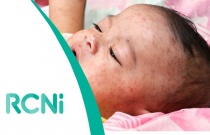
Measles: pathology, management and public health issues
Jackie Bentley, Jo Rouse and Jenny Pinfield
Measles is a highly contagious viral disease that continues to occur in epidemics in the UK despite efforts to eradicate it. In the acute stage, measles is associated with several complications including otitis media, but some of the most severe consequences of the disease occur months and even years after the initial infection.....