
Feeding the Malnourished Burn Patient
Samuel Coulson and Alison Woodley
0.50 Hours
This session will explain why some burn patients are malnourished before injury and describe the effects of malnutrition on the metabolic response to a burn. Later, it will explore the precautions that are necessary when feeding a malnourished burn patient.

Management of Inhalation Injury
Karl Walsh and Baljit Dheansa
0.50 Hours
This session will describe the clinical features of inhalation injury and explain how to assess the severity of inhalation injury. Later sections will offer guidance on the initial management of patients with inhalation injury.

Lower Limb: Foot
Karen Daly
0.50 Hours
This session acquaints the learner with the bony and ligamentous anatomy of the foot and describes the maintenance of the arches of the foot.

Neurology and Neurosurgery Headache
Edward Dyson and Matthew Elliot
0.50 Hours
This session will review the neurosurgical causes of headache, in particular bleeding in the brain and space-occupying lesions.

Neurology & Neurosurgery: Facial Pain
Rahul S Shah and Erlick AC Pereira
0.25 Hours
This session focusses upon the diagnosis, investigation and management of facial pain.

Endocrine: Parathyroid Lumps
Darren K. Patten
This session will provide you with an overview of the clinical presentation, investigation and management of parathyroid lumps.

Fluid Balance Homeostasis
John Findlay and Ridzuan Farouk
0.50 Hours
This session aims to provide a practical understanding of the physiology of fluid balance and renal failure, to aid trainees in their management of the surgical patient.

Fluid Balance and Homeostasis
Jonathan Lenihan
0.50 Hours
The impact of surgery on fluid and electrolyte balance and modern surgical thinking with regards to enhanced recovery are addressed in this session.

General Scoring Systems For Assessment of Injured Patients
Gemma Green
0.50 Hours
This session will review the scoring systems used in evaluation of the injured patient.

Indications for Using Uncrossmatched Blood
James Houston
0.75 Hours
This session will look at the use of uncrossmatched blood. It will start by exploring what makes donor blood compatible with that of a recipient. It details the common components of blood transfused, the risks involved in transfusion, including transfusion in the emergency setting. It finishes by defining major haemorrhage and d....
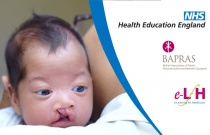
Evaluation of Treatment Outcome in Patients with Cleft Lip and Palate
Ciara Deall and Bruce Richard
0.50 Hours
This session will explain why it is important to evaluate the outcome of treatment for patients with cleft lip and palate, describing the main outcome measures that are currently in use and exploring the reliability and validity of each measure.
Mallet Deformity in the Digit
Bernard Robertson and Lanre Ajekigbe
0.50 Hours
This session will describe the causes of mallet deformity and the techniques for conservative and surgical management.

Duct Ectasia
Maria Chasapi and Milind Dalal
0.50 Hours
This session will describe the pathological features of duct ectasia and provide a differential diagnosis. Later sections will offer guidance on how to investigate a patient with possible duct ectasia and how to excise an area of duct ectasia.

Clinical Examination of the Patient with a Suspicious Breast Lump
Katie Dickson and Dan Prinsloo
0.50 Hours
This session will describe how to examine a patient with a suspicious breast lump and offer guidance on how to document the findings on examination.
Disseminated Gonorrhoea
David Barlow, Amandeep Gill and Jonathan Ross
0.50 Hours
This session covers recognition, diagnosis and management of disseminated gonococcal infection (DGI) at a specialist level. Current knowledge about pathogenesis of gonococcal infection, including host defence and virulence factors, is discussed.

Introduction to Blood Glucose Monitoring
Charlotte Avann
0.50 Hours
This session describes a method of blood glucose sampling by using the capillary finger prick method.

Basal Bolus Regimen
Charlotte Avann
0.75 Hours
This session provides the knowledge and skills required in initiating a basal bolus regimen in a well, newly diagnosed child with type I diabetes.

IUT: Facilitating Choice
Christina Fey, Jackie Abrahams and Paula Briggs
0.50 Hours
This session examines how to facilitate a woman's choice of intrauterine method through the use of self assessment questions. Three case histories are used to illustrate this.

IUT: Summary of Method
Jackie Abrahams, Christina Fey and Paula Briggs
0.50 Hours
This session is designed to give an overview of the intrauterine methods, their effectiveness, advantages and disadvantages. This session is aimed at those who already have a basic knowledge of the methods.

Managing Impalpable Implants
Noel Mack
0.50 Hours
This session will describe the initial management of women with impalpable implants, including a case scenario.

Imaging and Pain
Rahul Seewal and Gajan Rajeswaran
0.50 Hours
This session describes the use of various imaging techniques in the diagnosis and management of long-term pain conditions.
Non-pharmacological Cancer Pain Management
Simon Tordoff
0.50 Hours
This session covers the principles of non-drug management of cancer pain.
Dual Process Theory
Kerry Crawley
0.50 Hours
This session aims to introduce the concept of System 1 and System 2 type thinking, which forms part of the dual process theory.

Novice to Expert
Tom Mallinson
0.50 Hours
The theory of practitioner development from novice to expert was most comprehensively developed by Prof Patricia Benner (1984), an academic nurse and author, in relation to the development of expertise in nursing practice. Benner adapted the work of Dreyfus and Dreyfus (1980) to nursing practice.

Facial Pain Principles and Management
Rajiv Chawla
0.50 Hours
This session describes the presentation of clinical cases together with the options for treating pain mediated by the trigeminal system.